.avif)
What's Changed in Social Listening Analytics (2026 Update)
Before diving into the tools, here's what's shifted significantly since 2024:
- AI-powered listening is now standard, not premium. Large language models are now embedded in most enterprise listening platforms — not just for sentiment classification but for theme clustering, crisis prediction, and narrative summarization. Tools that relied on keyword matching alone are losing ground to semantic analysis.
- TikTok API listening has become a priority for brands. As TikTok has grown into a primary content discovery platform, tracking hashtags, trending audio, and creator mentions on TikTok has become as important as Instagram and Twitter listening. Most enterprise tools now cover TikTok natively; many smaller tools still don't.
- Influencer risk detection via listening is a new use case. Brands are now using social listening proactively to scan influencer content history for controversial posts, brand safety risks, and audience sentiment shifts before campaign sign-off — not just after a PR crisis.
- Real-time brand monitoring has become table stakes. The expectation for enterprise platforms has shifted from hourly data to true real-time alerts — catching brand mentions within minutes, not hours, to enable faster crisis response.
- API-first listening infrastructure is growing. More developer teams are building custom listening pipelines rather than using off-the-shelf dashboards. This means social listening APIs — not just SaaS tools — are in high demand for teams that want data embedded in their own products.
- The social listening market is expanding fast. Valued at approximately $9.6 billion in 2025, it's projected to nearly double to over $18.4 billion by 2030, growing at a CAGR of around 14% annually.
What Is Social Listening Analytics?
Social listening analytics is the practice of monitoring digital conversations across social media platforms, forums, blogs, and news sites — then analyzing that data to extract business intelligence. For a comprehensive overview of how the social listening market is structured, what categories of tools exist, and how to evaluate them by use case, see our in-depth guide to social media listening tools and platforms.
It goes beyond simply tracking mentions. Social listening analytics involves:
- Sentiment analysis — understanding whether conversations about your brand are positive, negative, or neutral, and why
- Trend identification — spotting emerging topics, viral content, and industry shifts before they peak
- Competitor intelligence — tracking what people are saying about rival brands, their share of voice, and their campaign performance
- Influencer monitoring — identifying which creators are driving conversations in your category and whether their content aligns with your brand values
- Crisis detection — catching spikes in negative sentiment early enough to respond before they escalate
- Audience insights — understanding the demographics, interests, and behaviors of the people participating in conversations relevant to your brand
The data collected through social listening analytics sets the foundation for smarter marketing decisions, faster crisis response, and more authentic influencer partnerships.

Barbie The Movie leveraged social listening effectively by engaging with fans online. After spotting a discussion comparing Ken's movie outfit to BTS's Jimin's attire, they produced a video with Ryan Gosling (Ken) acknowledging the similarity and gifting Jimin Ken’s guitar.
This became Barbie's most engaged tweet and most viewed TikTok, significantly increasing platform engagement. Jimin's Instagram response further amplified reach, demonstrating the impact of strategic social listening and influencer collaboration.
Social Listening vs Social Monitoring — What's the Difference?
This is one of the most searched questions in this space, so it's worth addressing directly before looking at tools.
Social monitoring is reactive and tactical. It tracks specific mentions, hashtags, and keywords in real time so your team can respond quickly. It answers the question: what are people saying right now?
Social listening is proactive and strategic. It aggregates and analyses data over time to identify patterns, sentiment shifts, and competitive trends. It answers the question: why are people saying it, and what does it mean for our business?
The most effective programmes combine both — monitoring for immediate response and listening for long-term strategy. The distinction matters when choosing tools: some platforms are built primarily for monitoring (real-time alerts, inbox management), while others are built for listening (analytics dashboards, trend reports, API access).
How to Do Social Media Listening via API
For developer teams building products that require social listening data — influencer marketing platforms, brand intelligence tools, social analytics dashboards — native platform APIs have significant limitations:
- Twitter/X API now requires paid access at $100–$5,000/month depending on volume
- Instagram's Graph API doesn't provide public content monitoring without user authentication
- TikTok's Research API is approved only for academic/research use cases
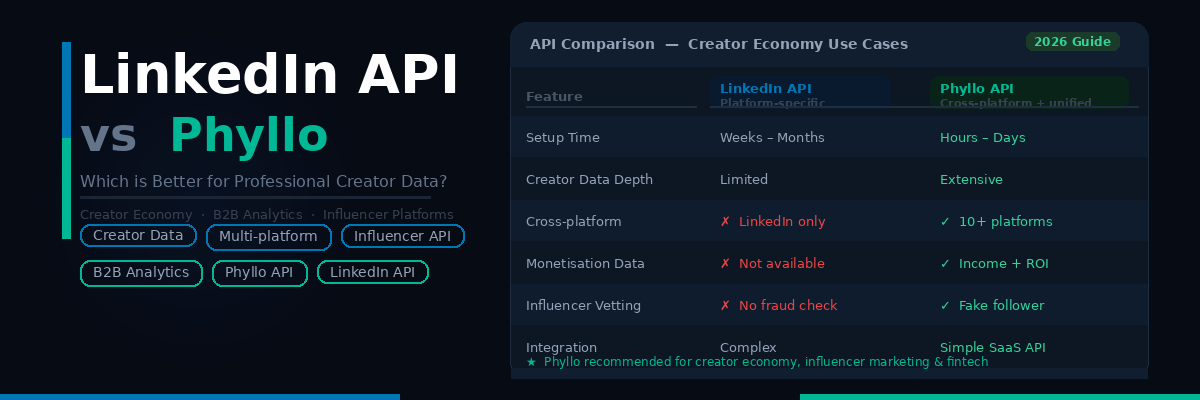
- LinkedIn doesn't offer any public listening endpoint
This is why most developer teams building social listening features use a third-party social listening API rather than attempting to aggregate directly from each platform. A unified API handles the data normalization, rate limit management, and platform-specific authentication across all platforms through a single integration. For developer teams evaluating a unified API solution, Phyllo's Social Listening API covers Instagram, TikTok, YouTube, LinkedIn, and X through a single integration — with both public data and authenticated creator data, giving platforms access to private metrics that most listening APIs can't reach.
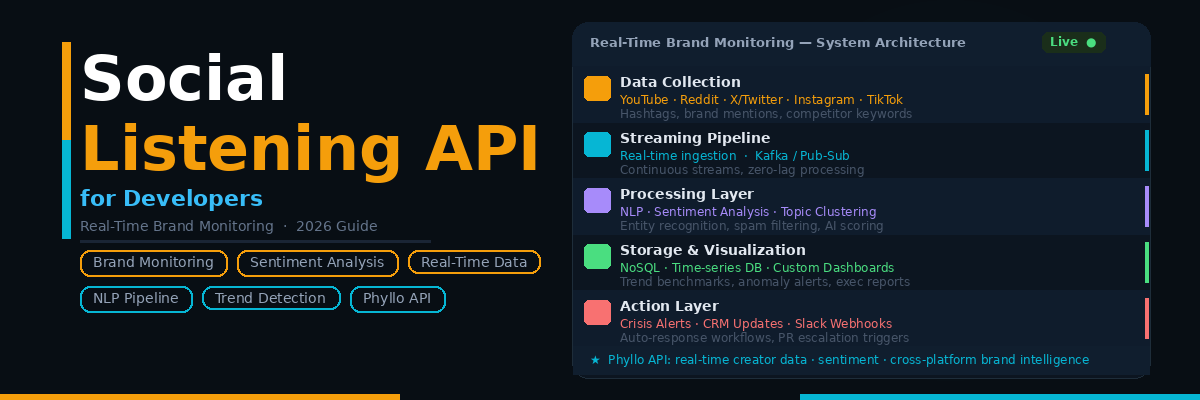
The four-step process for building a social listening pipeline via API:
- Define your monitoring parameters — brand names, competitor names, product keywords, industry hashtags, creator handles
- Connect to your data source — either platform APIs directly or a unified social listening API
- Apply NLP and sentiment classification — tag mentions by sentiment, theme, urgency, and relevance
- Build your analytics layer — aggregate into dashboards, set up alerts, and export to your BI stack
The Best Social Listening Analytics APIs and Tools for 2026
1. Phyllo Social Listening API
Best for: Developer teams and platforms building custom social listening workflows, influencer marketing platforms, and brand intelligence products.
Phyllo's Social Listening API provides programmatic access to social media conversations, engagement metrics, creator content, and audience data across Instagram, TikTok, YouTube, LinkedIn, and more — through a single unified API.
Unlike traditional social listening SaaS tools, Phyllo is API-first. Instead of logging into a dashboard, your team integrates Phyllo's data layer directly into your product, analytics pipeline, or custom dashboard.
Key capabilities in 2026:
- Real-time content data — engagement metrics (likes, views, reach, impressions) updated continuously
- Hashtag and keyword tracking across Instagram, TikTok, YouTube, and LinkedIn
- Creator profile monitoring — follower counts, engagement rates, content history, audience demographics
- Influencer risk detection — content flagging and brand safety scanning across a creator's full posting history
- Trending audio and hashtag tracking on TikTok — track viral sounds and topics as they emerge, not after they've peaked
- Location-based listening — use tagged location data to monitor regional sentiment and on-ground buzz
- Sentiment classification with AI scoring — relevance scores and sentiment ranking to filter signal from noise
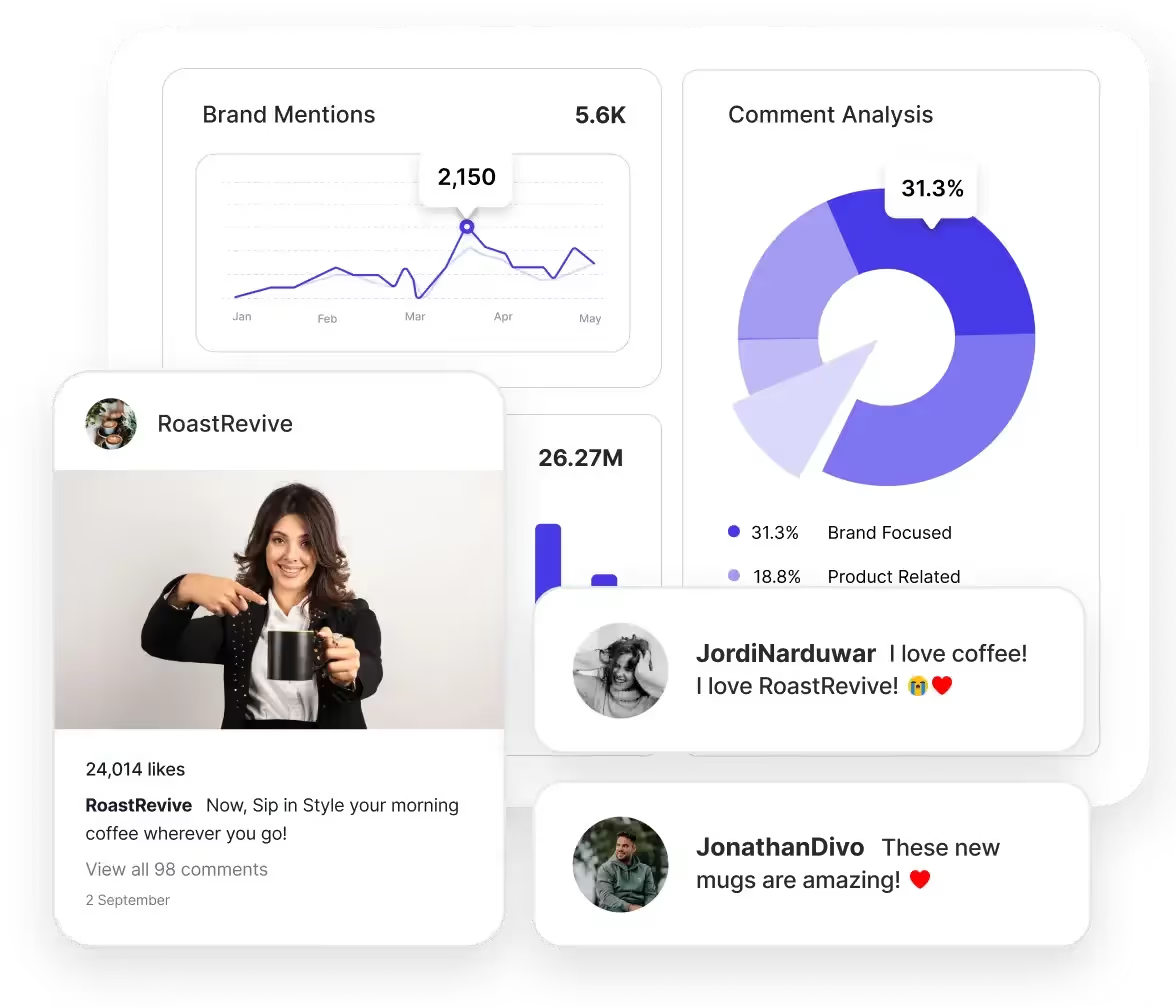
What makes Phyllo different from other social listening APIs: Phyllo provides both public data (no user authentication required) and authenticated creator data (with creator consent). Most social listening APIs only cover public data — which means no private metrics, no audience demographics, and no stories data. Phyllo's authenticated layer gives platforms access to the private data that brands actually need for influencer vetting and campaign measurement.
Cost: Saves up to 80% on integration costs vs building natively across each platform.
2. Brandwatch
Best for: Enterprise brands needing deep consumer intelligence and broad data coverage.
Brandwatch remains the market leader for enterprise social listening. Its AI-powered analytics cover 100+ million sources including social networks, forums, blogs, news sites, and review platforms. In 2026, its LLM-powered summarization features can automatically surface key themes from large conversation datasets — saving analyst hours on manual review.
Strengths: Largest data coverage of any platform, powerful custom dashboards, strong CRM integrations. Limitations: Enterprise pricing puts it out of reach for most mid-market companies. Dashboard-only — no API access for embedding into custom products.
3. Talkwalker
Best for: Global enterprises needing AI-powered insights with image and video recognition.
Talkwalker's Blue Silk AI now processes text, image, and video content — meaning it can detect your brand logo in an influencer's video even without a text mention. Its Virality Map surfaces trending topics and influencers before they peak, giving brands a window to engage at the right moment.
Strengths: Broadest media coverage including podcasts, TV, and print. Strong crisis detection and real-time alerts. Limitations: Complex setup, steep learning curve. Better suited for dedicated social intelligence teams than marketing generalists.
4. Sprout Social
Best for: Mid-sized brands managing both engagement and listening in one platform.
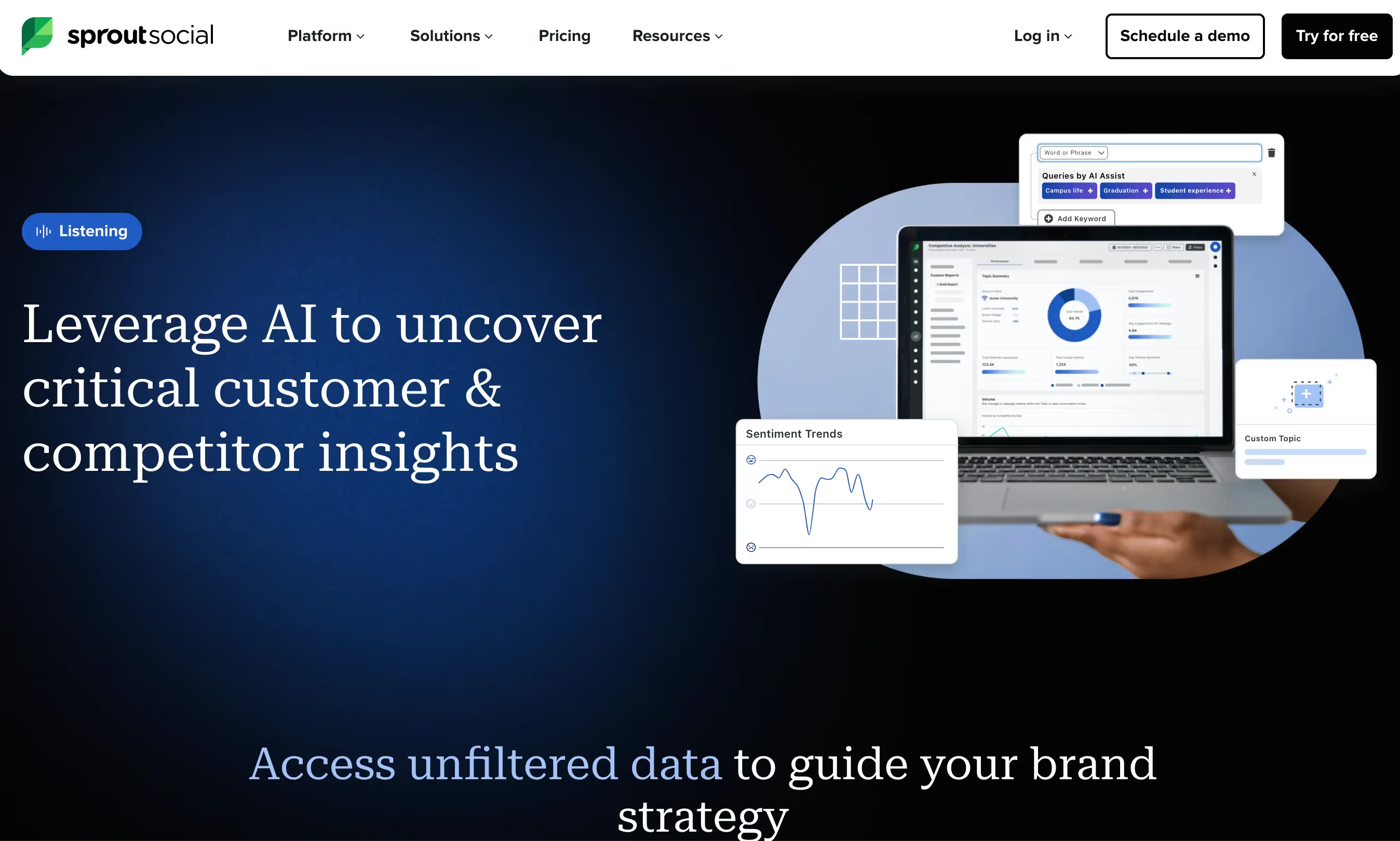
Sprout Social combines social listening with a full social media management suite — publishing, inbox, and analytics in one place. Its listening add-on covers trend analysis, audience demographics, and competitor benchmarking alongside day-to-day community management.
Strengths: Best-in-class UI, strong customer support, unified inbox and listening view. Limitations: Listening is an add-on, not the core product. Can feel like a compromise if advanced analytics is the primary need.
5. Meltwater
Best for: PR and communications teams needing media monitoring alongside social listening.
Meltwater combines social listening with traditional media monitoring — covering print, broadcast, and online news alongside social platforms. In 2026 it's particularly strong for PR teams that need to track brand coverage across both earned media and social conversations in one platform.
Strengths: Broadest channel coverage including traditional media. Strong for PR attribution and share of voice analysis. Limitations: Social-only listening capabilities are less deep than Brandwatch or Talkwalker. Pricing is enterprise-focused.
6. Mention
Best for: Startups and small businesses needing affordable, reliable monitoring.
Mention's RESTful API supports web, Android, and iOS clients and covers Instagram, Facebook, Twitter, forums, blogs, and general web content. It's one of the most affordable tools with genuine API access, making it a popular choice for developer teams building basic listening features without the budget for enterprise platforms.
Strengths: Affordable pricing, genuine API access, comprehensive platform support. Limitations: Less advanced sentiment analysis than enterprise tools. Data coverage narrower than Brandwatch or Talkwalker.
7. Brand24
Best for: Agencies and growing brands needing real-time alerts with solid analytics.
Brand24 covers social, news, blogs, forums, and review sites with real-time mention alerts. Its 2026 updates include improved AI sentiment scoring and a new influencer identification feature that surfaces creators driving conversations about your brand.
Strengths: Excellent price-to-feature ratio. Easy setup. Strong customer support. Limitations: Data coverage not as deep as enterprise platforms. No API access on lower tiers.
8. Keyhole
Best for: Brands running hashtag-driven campaigns and event monitoring.
Keyhole specializes in hashtag tracking, influencer analytics, and campaign performance measurement. It's particularly strong for tracking the reach and engagement of specific hashtag campaigns across Instagram, TikTok, and Twitter in real time.
Strengths: Best-in-class hashtag analytics. Strong influencer identification. Clean reporting dashboards. Limitations: Less comprehensive for always-on brand monitoring. Limited historical data on lower plans.
9. YouScan
Best for: Brands needing visual listening — logo and image detection across social.
YouScan's visual analytics engine detects brand logos, products, and scenes in images and videos across social platforms — capturing mentions that text-based tools miss entirely. This is particularly valuable for FMCG brands, sports sponsors, and any brand with strong visual recognition.
Strengths: Most advanced visual listening capabilities available. Strong audience insights and demographics. Limitations: Higher price point. Better suited for brands with significant visual presence than B2B companies.
Social Listening Analytics for Influencer Risk Detection
One of the fastest-growing use cases for social listening in 2026 is pre-campaign influencer risk detection — scanning a creator's content history before brand partnerships, not just monitoring after. For a technical breakdown of how this works in practice, our guide on using social listening APIs for influencer risk detection covers the full detection workflow — from scanning content history and flagging sentiment spikes to identifying fake followers and FTC compliance gaps.
Traditional influencer vetting checks follower counts, engagement rates, and audience demographics. Social listening adds a layer on top: what has this creator said historically? What topics do they engage with? Have they posted anything that could create brand safety issues?
The workflow looks like this:
- Shortlist creators based on reach, engagement, and audience fit
- Run social listening scans on each creator's content history — flagging potentially controversial posts, brand conflicts, or audience quality issues
- Analyse sentiment around the creator — what does their audience say about them? Are there negative patterns?
- Monitor ongoing — set up alerts so your team is notified if a partner creator posts anything flagged during the campaign
Phyllo's Social Listening API supports this workflow by providing full creator content history, engagement data, and audience sentiment signals through a single API — enabling influencer marketing platforms to build brand safety vetting directly into their product.
Choosing the Right Social Listening Analytics Tool
The right choice depends on three things:
Do you need a dashboard or an API? If you're a brand team logging in to monitor conversations, choose a SaaS tool (Brandwatch, Talkwalker, Sprout Social, Brand24). If you're a developer team building listening features into your own product, use an API (Phyllo, Mention).
What's your budget? Enterprise tools (Brandwatch, Talkwalker, Meltwater) start at $1,000+/month. Mid-market tools (Sprout Social, Keyhole, YouScan) run $200–$600/month. Affordable options (Brand24, Mention) start under $100/month. API solutions vary by usage volume.
Which platforms matter most? If TikTok and Instagram are your priority, prioritise tools with native TikTok coverage and real-time hashtag tracking. If traditional media alongside social is needed, Meltwater leads. If visual content is central to your brand, YouScan is the strongest option.
Wrapping Up
Social listening analytics has evolved from a brand monitoring luxury into a core business intelligence function. In 2026, the combination of AI-powered sentiment analysis, TikTok listening capabilities, real-time crisis detection, and influencer risk scanning means that brands and platforms investing in the right listening infrastructure have a measurable competitive advantage over those that don't.
For developer teams building products that require social listening data at scale, API-first solutions eliminate months of integration work and ongoing maintenance across individual platform APIs. For brand teams that need dashboards and reports, enterprise tools like Brandwatch and Talkwalker remain the most comprehensive options.
The right tool isn't the most expensive one — it's the one that matches your use case, data needs, and whether you need a dashboard or infrastructure.
Ready to integrate social listening into your platform? See how Phyllo's Social Listening API works →
Frequently Asked Questions
1. What is social listening analytics?
Social listening analytics is the process of monitoring and analyzing social media conversations, mentions, hashtags, and sentiment data to extract business intelligence. Unlike social monitoring — which tracks mentions in real time for immediate response — social listening analyses patterns over time to understand brand perception, competitive positioning, audience trends, and emerging risks.
2. How do you do social media listening via API?
To implement social listening via API, you connect to either individual platform APIs (Instagram Graph API, TikTok Research API) or a unified social listening API like Phyllo that aggregates data from multiple platforms through a single integration. You then apply sentiment analysis and NLP to classify the data, and feed it into your analytics dashboard or product. Unified APIs are recommended for most use cases because they eliminate the need to manage multiple platform integrations, rate limits, and authentication systems separately.
3. What is the best social listening API in 2026?
For developer teams and platforms building custom social listening features, Phyllo is the leading unified social listening API — covering Instagram, TikTok, YouTube, LinkedIn, and more with both public and authenticated (creator-consented) data. For teams that need a standalone SaaS dashboard, Brandwatch and Talkwalker lead the enterprise market. For affordable options, Brand24 and Mention are strong choices.
4. What is the difference between social listening and social monitoring?
Social monitoring is reactive — it tracks specific mentions and keywords in real time so teams can respond quickly to direct interactions. Social listening is proactive and strategic — it analyses broader conversation patterns, sentiment trends, and competitive dynamics over time to inform business decisions. Monitoring answers "what are people saying?" Listening answers "why are they saying it, and what does it mean for our strategy?"
5. How is AI changing social listening analytics in 2026?
AI is transforming social listening in three ways. First, LLM-powered sentiment analysis now understands context and nuance rather than just positive/negative keyword scoring. Second, predictive trend detection can identify emerging topics before they go viral. Third, visual recognition (detecting brand logos in images and videos) is capturing brand mentions that text-based tools miss entirely. Platforms like Talkwalker and YouScan are leading on AI-powered listening features.
Social listening analytics is the practice of monitoring digital conversations across
Related reads:
- Introduction to TikTok API — access, data & endpoints
- How to use Instagram API for social media analytics
- Social media API guide for developers
- Guide on social media listening & monitoring API

Building for LinkedIn Influencer Marketing - Everything you need to know